



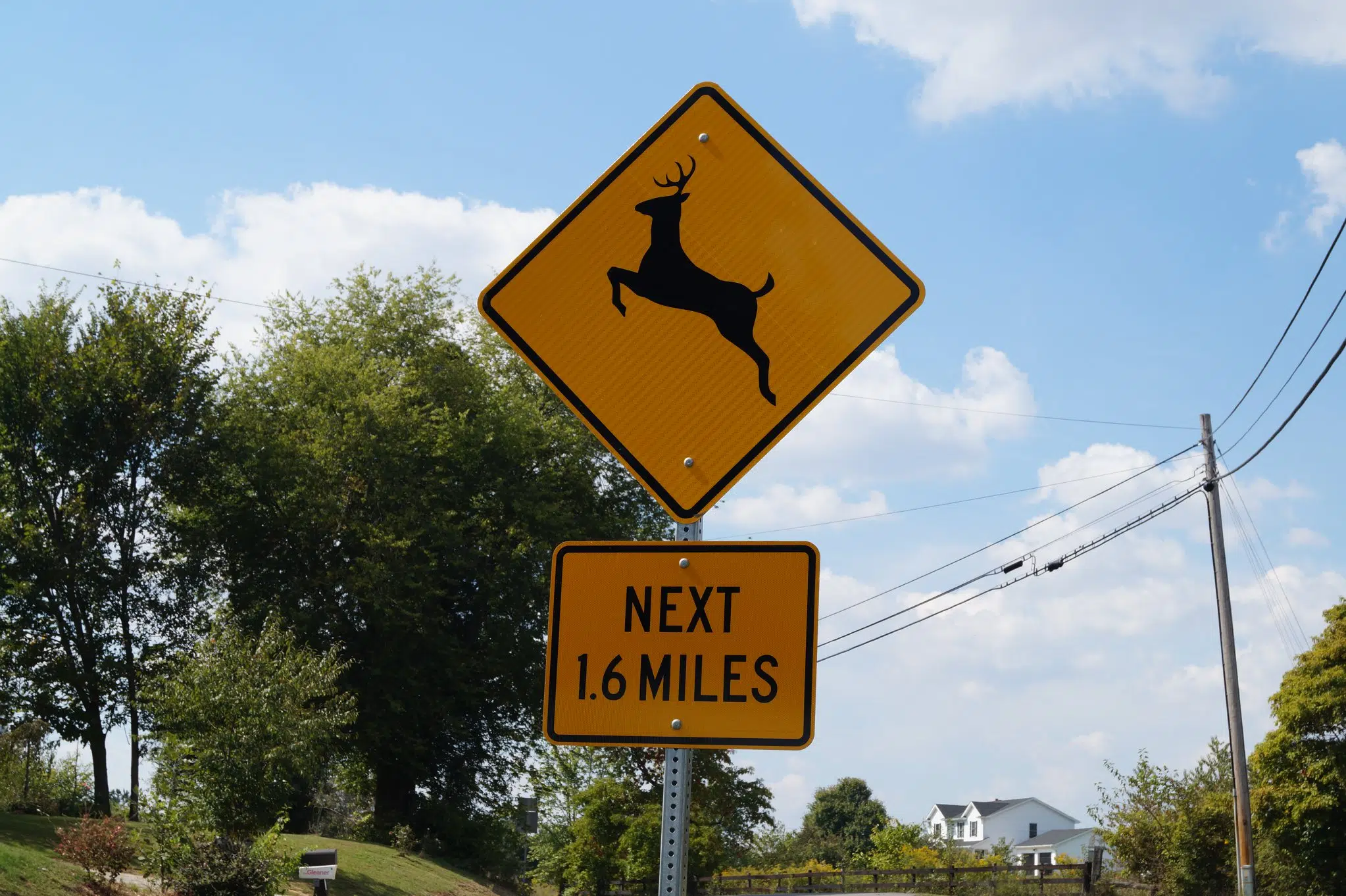
FRANKFORT, Ky. (Sept. 29, 2026) – The best defense against a deer-related crash is to stay alert, slow down and buckle up.
New crash data shows Kentucky experienced a seven-year high of 3,411 deer collisions in 2025, underscoring the importance of safe driving habits as peak deer movement season gets underway along roadways statewide.
According to the Kentucky Department of Fish and Wildlife Resources, deer movement typically increases during the fall as mating season begins and food sources shift. Deer often travel farther distances during October, November and December, making roadway encounters more common.
Kentucky State Police data shows deer crashes have climbed each year since 2020, resulting in an overall 18.2% increase over the past five years.
While crash numbers increased last year, data showed a positive downward trend in deer crash-related fatalities with none reported in 2025, compared with six fatalities in 2024. Thirty people were reported to have been seriously injured in these crashes. Nearly half of all deer collisions occurred during the final three months of the year. November recorded the highest number of crashes with 823 reported collisions, followed by October with 394 and December with 330. Together, those three months accounted for nearly 46% of all reported deer crashes in 2025.
“October to December is mating season for deer, a time when deer activity peaks as males roam further afield to locate females,” said Joe McDermott, deer program coordinator for the Kentucky Department of Fish and Wildlife Resources. “Fall also pressures deer to move in search of food and shelter as cover foliage disappears, crops are harvested and natural food sources are depleted. Drivers should be aware that they could see deer crossing quiet lanes and busy highways at any time during the season, particularly at dawn and dusk.”
Kentuckians should drive with caution, especially at sunrise and sunset when deer are most active. Crash data also shows deer-related collisions are most common during evening commuting hours and periods of low light. The highest crash totals occurred between 6 p.m. and 8 p.m., with 304 crashes reported at 6 p.m., 242 at 7 p.m. and 281 at 8 p.m., highlighting the need to drive alert at dusk and in the evening.
Among Kentucky counties, Hopkins County recorded the highest number of reported deer collisions in 2025 with 134, followed by Hardin County (118), Muhlenberg County (95), Nelson County (95) and Boone County (94). Several western Kentucky counties ranked among the highest for deer crashes, continuing a pattern seen in recent years.
State Farm Mutual Automobile Insurance Co. issues a yearly report of collisions involving deer and other wildlife based on insurance claims. Despite a national decrease in wildlife-involved collisions, for the year ending June 30, 2025, State Farm reported more than 1.6 million animal collision claims in the United States, and deer remain the most frequently struck animal.
The Kentucky Transportation Cabinet (KYTC) offers these driving tips to stay safe:
- Stay Aware: Be vigilant, especially in forested terrain, and during dusk and dawn when deer are most active. Deer often travel in groups so others may be close behind if you see one.
- Be Prepared: Always wear a seat belt (it’s the law) and eliminate distractions (phones down!).
- Turn On Headlights: Keep them on bright unless other vehicles are approaching.
- Slow Down: Take your foot off the gas immediately if you spot a deer crossing the roadway.
- Don’t Swerve: Trying to avoid a deer can result in a more serious crash with an oncoming vehicle or roadside object.
- If There’s a Crash: Keep both hands on the wheel and apply brakes steadily until stopped.
Motorists are asked to report all deer-vehicle collisions to police. KYTC traffic engineers use the crash data to help place deer-crossing warning signs and other safety measures.
Kentucky was one of 17 states to receive a federal grant in 2024 to make roadways safer for people and wildlife. The $1.2 million award funded a wildlife-vehicle collision reduction plan and a pilot study in central Kentucky. Analysts examined vehicle collisions along the U.S. 60/Interstate 64 corridor in Jefferson, Shelby and Franklin counties where white-tailed deer are involved in a high number of collisions and collected data to understand deer habitat and behavior patterns using drones, GPS collars, trail cameras and field surveys. KYTC is continuing its assessment to identify infrastructure solutions to reduce wildlife-vehicle collisions.
Comments